
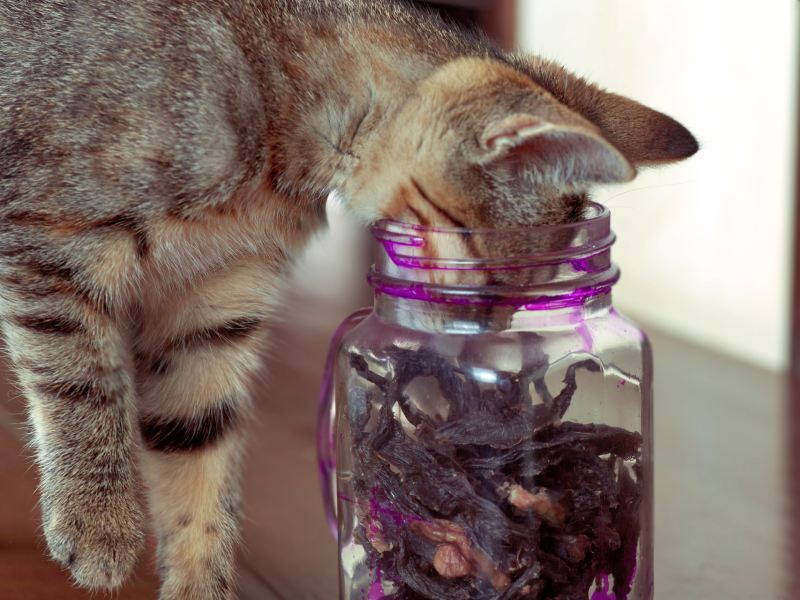
Can Cats Eat Beef Jerky? 5 Reasons Why Jerky Isn’t So Fine for Felines
The meaty aroma that fills the air when you open a bag of beef jerky is pretty much guaranteed to make your mouth start watering.
And if you have a cat, you’ve probably noticed that the scent of beef jerky really whets his appetite as well. Seeing those big eyes staring up at you, silently begging for a morsel of jerky… it can be hard to resist sharing your snack with your cat.
Besides, cats are carnivores, so beef jerky should be perfectly fine for them to eat, right?
Well, it’s actually a little more complicated than that.
Read on to learn why cats and beef jerky don’t mix — and learn what to do if your cat gets his paws on your jerky anyway.
5 Reasons Not to Give Your Cat Beef Jerky
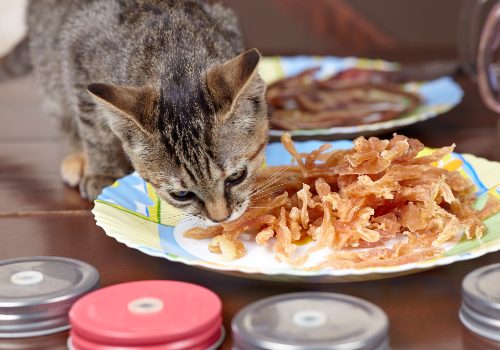
1. Beef Jerky Is Too High in Sodium for a Feline Diet
The explosive flavor and long shelf life of beef jerky are due in large part to its high sodium content.
Salt prevents bacterial growth and eliminates the need for refrigeration… and it’s undeniably tasty to boot. That’s why jerky is often loaded with it in various forms: soy sauce, Worcestershire sauce, meat tenderizer, curing salt, and, of course, regular old table salt.
But too much sodium isn’t good for any organism, whether human or animal. And cats are especially sensitive to high sodium levels, making beef jerky a serious feline health hazard.
Sodium Poisoning in Cats
Eating too much salt throws off your cat’s electrolyte balance and could give him sodium poisoning, a serious condition that can turn lethal if left untreated. Senior cats and cats with kidney disease or diabetes are especially susceptible to sodium poisoning.
Sodium poisoning usually presents first as intense dehydration and thirst, causing the cat to drink far more water than normal. From there, symptoms can progress to low appetite, weakness, lethargy, behavioral changes, seizures, and even unconsciousness.
If your cat eats beef jerky by accident, provide him with plenty of fresh water and monitor him for symptoms of sodium poisoning. Seek immediate medical attention if you notice any symptoms — a vet can provide your cat with IV fluids and a stable environment to recover in.
2. Beef Jerky Often Contains Ingredients That Are Toxic to Cats
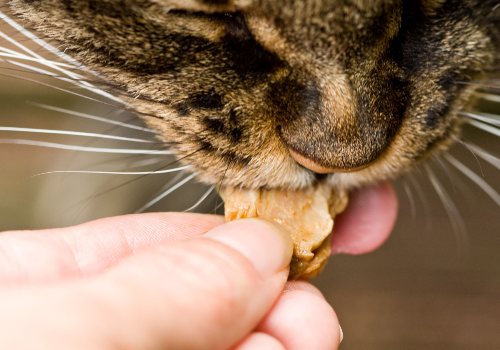
Sodium isn’t the only component of beef jerky that’s potentially hazardous to your cat.
Jerky marinades often contain garlic and/or onion, both of which are highly toxic to cats. Even a tiny amount of either ingredient can cause vomiting, diarrhea, and the rupturing of red blood cells — a symptom that’s often fatal.
Some sugar-free beef jerky is sweetened with xylitol, an artificial sweetener that’s deadly to dogs. It doesn’t seem to cause serious problems in cats, but if you have a dog too, that’s one more reason to keep sugar-free jerky out of reach.
And if your jerky is of the spicy variety, it’s even less suitable for your cat due to its hot pepper content. Capsaicin, the compound that makes peppers spicy, is likely to give your cat a stomachache, irritate his mouth and throat, and make him vomit.
If your cat consumes any of these ingredients, whether or not they’re jerky-related, call your vet right away and be prepared to bring your cat in for urgent treatment.
3. Beef Jerky Can Pose a Choking Hazard to Cats
Cats have evolved to eat fresh meat that’s softer, wetter, and more tender than beef jerky. They’re just not used to such tough, chewy textures — and when they encounter them, they don’t always know how to deal with them.
Your cat may try to swallow a piece of jerky like it was fresh meat, chewing it just a few times before sending it down his throat.
That’s fine for softer foods, but jerky needs to be chewed a lot more to reach a swallowable size. Otherwise, large pieces can get lodged in the throat, blocking your cat’s airway and sending him into a choking fit.
And to make matters worse, your cat’s barbed tongue prevents him from spitting out the contents of his mouth. Combine that with a big chunk of leathery, rubbery jerky, and you’ve got a recipe for disaster.
If your cat tries to eat beef jerky and chokes, you’ll need to act quickly to pull the jerky out of his mouth with your fingers. Should that fail, you’ll have to perform a cat Heimlich maneuver to dislodge the jerky.
4. Beef Jerky — and Beef in General — Can Cause an Allergic Reaction in Cats
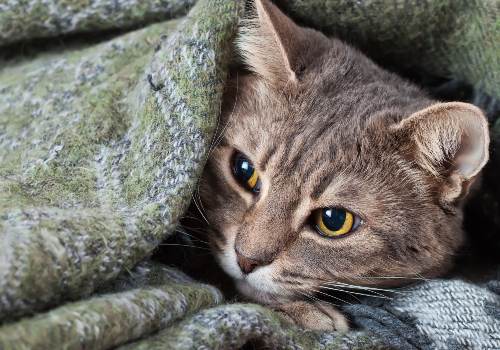
You’d think that cats would have no problems eating beef, but that’s often not the case. In fact, beef is one of the most common feline food allergens, whether it’s in jerky form or not.
Itchy skin is the most obvious symptom of feline beef allergy, and the intense scratching it provokes can lead to hair loss, skin redness, lesions, and infection. Other beef allergy symptoms include vomiting, low appetite, general inflammation, and diarrhea.
In severe cases, feeding beef to a cat who’s allergic to it could cause an anaphylactic reaction — swelling of the throat and tongue that prevents breathing and is often fatal.
5. Beef Jerky Desiccant Packets Can Be Dangerous for Cats
Many cats just can’t help but try to eat any novel object they come across, whether or not it’s actually edible.
And if you buy commercial beef jerky that comes with desiccant packets, those little bundles of silica gel could end up being your cat’s next big obsession.
It’s easy to absentmindedly leave your desiccant packets out on the counter or table after you open your bag of jerky — and your cat may interpret this as a snack offering. But it’s also easy to accidentally grab a packet along with a piece of jerky and toss both to your cat without realizing it.

- Dry-erase lid lets you record dates directly on the container.
- Silicone seal helps contain food odors in the refrigerator.
- Dishwasher-safe container reduces cleanup after storing deli foods.
Either way, your cat could choke on the desiccant packet, requiring you to intervene as described above in section 3. If he does manage to swallow it without incident, a silica gel packet won’t poison him, but the iron-filled oxygen absorbers found in many jerky bags can, so call your vet. Either kind could also upset his stomach or become lodged in his intestine, the latter of which requires urgent medical attention.
Bottom Line: Don’t Give Your Cat Beef Jerky
We know it’s hard to say no to your cat, but giving him beef jerky just isn’t worth the numerous risks to his health and safety.

- Single-ingredient freeze-dried chicken breast, with no fillers, artificial flavors, or colors.
- The soft-crisp texture breaks apart easily for kittens, seniors, and cats with sensitive teeth.
- Freeze-drying keeps the meaty aroma that tempts even picky cats.
Our advice: head to the pet store and pick up a package of jerky-esque cat treats to share with him while you eat your beef jerky. That way he can feel included during treat time — and you can stop feeling guilty for withholding beef from your carnivorous companion!

- Made with 99 percent animal ingredients, including poultry and wild-caught flounder.
- Grain free and high in protein, at about 1 calorie per treat.
- Small bites work well for training or a quick reward.
Can Cats Eat Beef Jerky | Healthy Food or Not?
QUOTE:
"You might be a redneck if you think that beef jerky and moon pies are two of the major food groups."
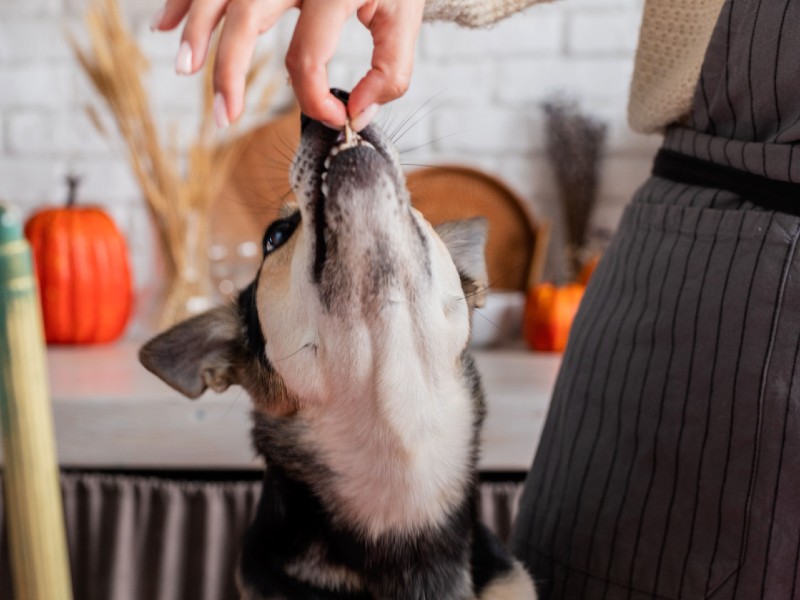
Can Dogs Eat Beef Jerky? 4 Reasons Why This Savory Snack Could Be a Safety Hazard
Beef Jerky Nutrition Examined: A Snack Worth Its Salt?

About the Author
Charles Joseph
In 2017, a good friend introduced me to the most amazing beef jerky I had ever tasted. And it was from the most unexpected of places--a guy in Thailand. Although I had been eating jerky since as far back as I could remember, I was genuinely blown away by the flavor. It was then that I realized the best beef jerky doesn't come from a store. This experience inspired me to create Beef Jerky Hub and put into writing all the things I've since learned about this amazing food. If you're interested, you can read more about my story here.